What are the Signs and Symptoms of Atlas Subluxation Complex (ASC)?
By Dr. Grayson Blom - Boise, Idaho
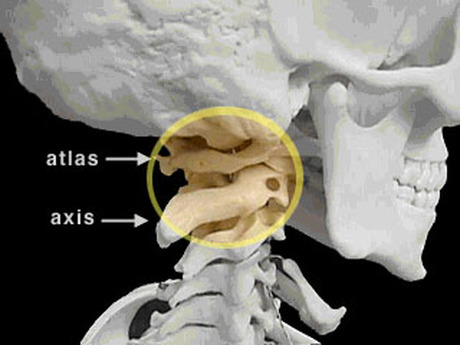
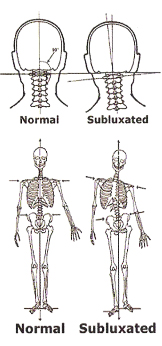
The very first bone in the neck is called Atlas or C1 for short and it is a ring like bone at the junction where the head and neck meet. The second neck bone is called Axis or C2 for short and is found just below Atlas. Atlas and Axis together are commonly referred to as the upper cervical spine. The Atlas and Axis are in close proximity to a portion of your central nervous system called the brain stem. The brain stem controls and coordinates virtually all of your body's vital functions. When damage to the connective tissues occurs due to accidents and injuries, Atlas and Axis can misalign and lock into a stressed abnormal position, resulting in pressure, tension, irritation, disruption to blood flow and cerebrospinal fluid circulation. Atlas/Axis subluxation will also result in Postural Distortion in the spine below.
It is critical to note that an Atlas, Axis Subluxation will remain stuck in its abnormal configuration slowly causing health problems over time, with the average time to onset of symptoms being 10-15 years.
It is critical to note that an Atlas, Axis Subluxation will remain stuck in its abnormal configuration slowly causing health problems over time, with the average time to onset of symptoms being 10-15 years.
| 
|
Signs and Symptoms of Atlas Subluxation Complex
Here is a list of some of the most common signs and symptoms of Atlas Subluxation Complex. Please note that the average case we see in the office will have at least 3 of the following signs and symptoms.
1. Neck Pain, Stiffness, Muscle Ache
2. Headaches that frequently involve the base of the skull and radiate usually to one side of the head.
3. Migraine's that not only produce a throbbing pain but may cause visual disturbance, nausea, or vomiting.
4. Vertigo, Dizziness, Faintness, ringing in the ears (tinnitus) and some types of hearing loss.
5. Facial Pain or Palsy (Trigeminal Neuralgia, Bells Palsy)
6. Grating or crackling sounds in the neck or at the base of the skull when turning the head or neck.
7. Inability to fully turn or lean your head to one side or the other (loss of range of motion).
8. Shoulder pain that is commonly between the shoulder blades but can occur between the neck and shoulder area as well.
9. Jaw pain that is typically behind the jaw or close to the ear.
10. Postural Distortion:
a. Head Tilt
b. Shoulder Tilt
c. Pelvic Tilt
d. Short Leg
e. Please note that head, shoulder, rib cage, and pelvic rotation can also occur.
11. Chest or Rib ache, discomfort, or pain From Postural Distortion.
12. Nerve root irritation can occur at the resulting stress points along the spine.
13. Radiating arm pain, shoulder pain and leg pain (sciatica) can develop through nerve root tension and irritation.
14. Low back pain and spinal disc damage occur over time due to Postural Distortion.
15. Hip, knee, or ankle pain and dysfunction typically on the side of the short leg.
16. Brain congestion due to mechanical blockage of blood flow, particularly venous drainage and cerebrospinal fluid circulation. (Current research is pointing to neurodegenerative disorders developing over time due to long term brain congestion).
17. High Blood Pressure (neurologically based)
18. Vagus nerve disruption can present as heart, lung, stomach, digestive, and bowl disorders.
19. Dysautonomia due to imbalance between sympathetic (fight or flight system) and parasympathetic (rest and digest system) nervous system which most commonly results in over-activity of the fight or flight response leading to a chronic stress state.
20. Difficulty sleeping, insomnia and some cases grind their teeth at night (bruxism).
1. Neck Pain, Stiffness, Muscle Ache
2. Headaches that frequently involve the base of the skull and radiate usually to one side of the head.
3. Migraine's that not only produce a throbbing pain but may cause visual disturbance, nausea, or vomiting.
4. Vertigo, Dizziness, Faintness, ringing in the ears (tinnitus) and some types of hearing loss.
5. Facial Pain or Palsy (Trigeminal Neuralgia, Bells Palsy)
6. Grating or crackling sounds in the neck or at the base of the skull when turning the head or neck.
7. Inability to fully turn or lean your head to one side or the other (loss of range of motion).
8. Shoulder pain that is commonly between the shoulder blades but can occur between the neck and shoulder area as well.
9. Jaw pain that is typically behind the jaw or close to the ear.
10. Postural Distortion:
a. Head Tilt
b. Shoulder Tilt
c. Pelvic Tilt
d. Short Leg
e. Please note that head, shoulder, rib cage, and pelvic rotation can also occur.
11. Chest or Rib ache, discomfort, or pain From Postural Distortion.
12. Nerve root irritation can occur at the resulting stress points along the spine.
13. Radiating arm pain, shoulder pain and leg pain (sciatica) can develop through nerve root tension and irritation.
14. Low back pain and spinal disc damage occur over time due to Postural Distortion.
15. Hip, knee, or ankle pain and dysfunction typically on the side of the short leg.
16. Brain congestion due to mechanical blockage of blood flow, particularly venous drainage and cerebrospinal fluid circulation. (Current research is pointing to neurodegenerative disorders developing over time due to long term brain congestion).
17. High Blood Pressure (neurologically based)
18. Vagus nerve disruption can present as heart, lung, stomach, digestive, and bowl disorders.
19. Dysautonomia due to imbalance between sympathetic (fight or flight system) and parasympathetic (rest and digest system) nervous system which most commonly results in over-activity of the fight or flight response leading to a chronic stress state.
20. Difficulty sleeping, insomnia and some cases grind their teeth at night (bruxism).
Atlas Subluxation Complex (ASC) Doctors in Boise Idaho
Dr. Grayson Blom is an Upper Cervical Chiropractic specialist located in Boise Idaho. Specializing in the detection and correction of Atlas Subluxation Complex (ASC). If you suspect you are suffering from Atlas Subluxation Complex (ASC) we invite you to give us a call to schedule a consultation to determine if you are a candidate for care. You can call (208) 559-0541 or "click" to schedule.
REFERENCES:
1. Eriksen, K. Upper Cervical Subluxation Complex: A review of the chiropractic and medical literature. (2004)
2. Eriksen, K. Rochester, R.P. Orthospinology Procedures: An evidence based approach to spinal care. (2007)
3. Thomas, M.D. NUCCA Protocols and Perspectives: A textbook for the national upper cervical chiropractic association. First Edition. (2002)
4. Palmer, B.J. The Subluxation Specific Adjustment Specific, Davenport IA, (1934)
5. Palmer, B.J. Chiropractic Clinical Controlled Research. Davenport, IA, (1951)
6. Upper Cervical Diplomate Program, Sherman College of Straight Chiropractic. Spartanburg, SC, (2005)
7. Upper Cervical Diplomate Program, ICA Council on Upper Cervical Care, (20
2. Eriksen, K. Rochester, R.P. Orthospinology Procedures: An evidence based approach to spinal care. (2007)
3. Thomas, M.D. NUCCA Protocols and Perspectives: A textbook for the national upper cervical chiropractic association. First Edition. (2002)
4. Palmer, B.J. The Subluxation Specific Adjustment Specific, Davenport IA, (1934)
5. Palmer, B.J. Chiropractic Clinical Controlled Research. Davenport, IA, (1951)
6. Upper Cervical Diplomate Program, Sherman College of Straight Chiropractic. Spartanburg, SC, (2005)
7. Upper Cervical Diplomate Program, ICA Council on Upper Cervical Care, (20






Glad to hear you’ve found relief with diet and THC!
I’m a 30 year old male who takes CBD oil for anxiety. It’s really helpful. However, I am a bit concerned about negative effects it may have on my hormone levels. I enjoy a high sex drive and no man boobs, and would like to keep it that way.
I was curious if you knew of any quality peer-reviewed evidence that sheds light on this topic. I’ve thus far been unable to find any.
Thank you
David
I am a college instructor. 51 year old male.
Thanks for the post! As someone with Hashimoto’s and Hypothyroidism, what are your thoughts on CBD oil and fertility/pregnancy?
Thanks,
JP
My mother soffers from maculopathy and I would like to buy a CBD oil for her because I read that could help. But I dont really know where to get a good and trustable one which has a good ammount of cannabinoid.
Thanks a lot!
I am interested in both hbp control and Hashimotos. Could you please comment on those for me. I am interested,
https://www.maryvancenc.com/hashimotos-causes-treatments/
I am 53 yr old woman. I lost my career and life to Fibromyalgia/CFS. I tried CBD Oil from a dispensary in my town for the very first time. The CBD oil was a 480 mg bottle of CBD only, no THC. I was careful to avoid having a panic attack with the THC. The seller said to take 1 full dropper (48 mg) per dose. I got very dizzy. The bottle says it has “terpenes” in it. I read up on Google and terpenes are like essential oils that give the pot plant aroma. Would those make me dizzy? Or is it the CBD oil? It really helped my pain but I got very dizzy and the dizziness made me nauseous.
Very informative article. We love how CBD is gaining more and more popularity as people turn away from traditional medicine and look for natural solutions. We would love to offer you a free bottle of one of our products to try. Please get in touch if interested!
been searching any alternative medicine that can help me then i came across this article that says marijuana can be used to treat
and prevent glaucoma. I’ve been planning to try this kind of strain here in https://blog.bonzaseeds.com/purple-sour-diesel/ but i have no idea where to start or buy. Can you
guys give me any tips or any ideas that can help? Thank you and God bless !!
but there seems to be an error in your information, it actually does NOT lower cortisol according to the very study you are citing.
https://www.ncbi.nlm.nih.gov/pubmed/8257923
“…decrease [from placebo] in cortisol levels was significantly attenuated[!] after CBD..” – and also the numbers they give show that cbd does not lower cortisol.
i have seen the seemingly wrong information of cbd lowering cortisol many times now but i have yet to see a study which actually shows its power to lower cortisol.
I found your website and just purchased some CBD oil to lower my cortisol. However, I have to agree with Chris that the study you cited actually says it does not have that effect. It says that cortisol is lowered for the placebo group but that when CBD is introduced, that effect is “greatly attenuated” (meaning it does not have that effect). Could you please direct me to another study that shows that it does? Thank you,
Andrea
Ben Greenfield’s post links to many studies and is quite comprehensive: https://bengreenfieldfitness.com/article/supplements-articles/how-to-use-cbd-oil/
Appreciate Your Effort. Great Work Buddy
Has anyone else had this type of experience? Or even researched this topic? I have heard about people actually quitting by substituting it w/ bud. Interesting to me.
I’ve been having trouble myself trying to quit smoking cigars. I tried searching for other alternatives like vaping but after a month i came back to cigarettes. I was so desperate to quit and avoid nicotine but then i came across this article that says marijuana can help you quit smoking cigarettes and turns out, CBD can help after all.CBD can remove positively associated smoking memories from the brain, making it easier for the user to quit altogether. Can someone give me more information or any tips? Thanks
Thanks for sharing the wonderful article on CBD and its health benefits. I used to be very irritating because of insomnia. One of my friends recommended me about CBD Products. Then I started researching about CBD and came across an article https://cbdvapegenius.com/blog/what-is-cbd-cbd-in-depth-from-cbd-vape-genius/ which helped to understand CBD better and I ordered CBD Gummies. Taking a dose at night helped me to overcome the problem of insomnia. Now I wake up in the morning fresh and energetically. Apart from my story, let me tell you that I love your article and will share it with my friends. Thanks for sharing great information!
Nice article on CBD. I’ve been personally dealing with chronic back pain for the past 7 years and I ditched my regular meds and started taking CBD Oil when a far relative of mine recommended it to me. Since then I’ve never looked back. CBD has helped me give good relief from pain and helps me sleep better. Above all, it keeps me active in the gym. Just bookmarked your site. Keep rocking this kinda cool information
The point it, we don’t know, as vaping hasn’t been around long enough to study longterm effects.
Also, I cannot imagine that vaping would in any way improve asthma. You could probably get similar or better benefit from edibles if it’s truly the THC/CBD that’s improving your condition.
Actually, I’ve just read a great article about this topic. There’s a lots interesting facts and points as to “good use of marijuana”. For example, cannabinoids, which is contained in the plant of marijuana, tend to interact with various receptors in the brain and therefore have significant effects caused by the usage of brain boosters.
Read it yourself, if you want to learn more about this topic: https://tonusjournal.com/brain-health/marijuana-nootropics-effective-brain-booster/
Superb post. It’s great to see that CBD is emerging and rapidly conquering the market. Also, more and more people are getting to know about it’s benefits. Personally, I’m dealing with back pain problem and CBD has been helping me for the last 2 years. Helps me by keeping active and supporting my back all day long. Anyways, keep sharing this kinda stuff
is